Tesla Not Interested in Manufacturing Electric Vehicles in India, Confirms Union Minister Kumaraswamy
Keywords: Tesla India manufacturing, Kumaraswamy Tesla news, India EV policy, Tesla EV imports, electric vehicle market India
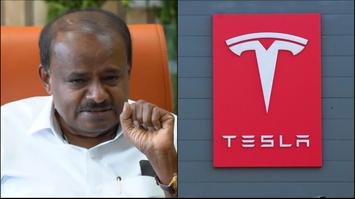
In a significant update regarding India’s electric vehicle (EV) ambitions, Union Minister for Heavy Industries H.D. Kumaraswamy has revealed that Tesla Inc., the American electric car giant led by Elon Musk, has shown no interest in manufacturing electric vehicles within the country. The announcement comes just months after the Indian government introduced an ambitious EV policy designed to attract global automakers and encourage local production.
Speaking to the media, Kumaraswamy clarified that Tesla has made it clear it does not plan to set up a manufacturing unit in India. Instead, the company has expressed interest in entering the Indian market through imports and retail sales, possibly establishing showrooms and service infrastructure.
India’s New EV Policy Aimed to Attract Giants Like Tesla
In early 2024, the Government of India unveiled a new electric vehicle policy that offers a reduced import duty of 15%—down from the existing 70%—on a limited number of electric cars for companies willing to invest at least $500 million (approx. ₹4,150 crore) in local manufacturing. The policy mandates that manufacturing operations must begin within three years from the date of commitment.
This initiative was seen as a direct move to bring Tesla and other global EV manufacturers into India’s local production ecosystem. The idea was to not only reduce the cost of EVs for Indian consumers but also to bolster the country’s efforts to become a global EV hub.
However, Tesla’s reluctance to commit to local manufacturing puts a damper on those hopes. Despite multiple rounds of discussions in previous years between Tesla representatives and Indian officials, the company appears to remain cautious about making long-term investments in India.
Focus on Imports Over Local Investment
According to Kumaraswamy, Tesla’s current interest lies primarily in importing its electric vehicles into India for sale, rather than building them locally. While this strategy may allow Tesla to test the Indian market with premium models like the Model 3 and Model Y, it does not align with the government’s vision of promoting domestic production and job creation through the “Make in India” initiative.
Importing vehicles also makes Tesla models significantly more expensive for Indian consumers. With current import duties, a Tesla car priced at $40,000 in the U.S. could cost ₹60–70 lakh in India, putting it well out of reach for most buyers in the country.
Global Automakers Responding to India’s EV Push
While Tesla has opted out of local manufacturing for now, other global automakers have taken a more proactive stance. Mercedes-Benz, Hyundai, Kia, and the Volkswagen Group (which includes Skoda) have all shown strong interest in India’s updated EV policy and are reportedly exploring plans to invest in Indian manufacturing.
These companies are likely to benefit from the tax cuts and incentives if they commit to the policy’s requirements, offering more affordable EV options to Indian consumers.
Meanwhile, domestic manufacturers like Tata Motors, Mahindra & Mahindra, and Ola Electric are accelerating their EV production and expanding their portfolios to meet rising demand and government targets. The Indian EV market, currently accounting for just around 2.5% of total car sales, is projected to grow to 30% by 2030.
Implications for Tesla’s Future in India
Tesla’s decision may limit its market share in India, especially if other automakers introduce competitively priced, locally manufactured electric cars. While Tesla enjoys a premium brand image and strong global recognition, its absence from domestic manufacturing could make it less competitive in pricing and availability.
Industry experts believe that unless Tesla revisits its strategy and aligns with local policies, it risks missing out on one of the world’s fastest-growing EV markets. Additionally, Indian consumers may favor brands that are manufactured domestically, especially with the government’s push toward “Vocal for Local” and sustainability.
Conclusion
Union Minister H.D. Kumaraswamy’s statement puts to rest months of speculation about Tesla’s manufacturing plans in India. While the EV giant’s decision to enter the Indian market through imports is a welcome development, its unwillingness to invest in local production may be seen as a missed opportunity for both Tesla and India’s EV ecosystem.
With India opening its doors wider than ever for global EV manufacturers, the spotlight now shifts to companies willing to make long-term commitments and build in India for India—and potentially, the world.