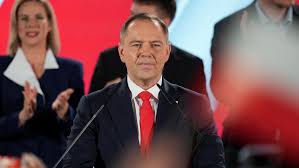
In a tightly contested and highly consequential election, Poland has chosen Karol Nawrocki as its next president, ushering in a new political era with wide-ranging implications for the country’s domestic governance, judiciary independence, and relationship with the European Union. Nawrocki’s narrow victory over centrist challenger Rafał Trzaskowski reflects deep ideological divisions within the electorate and marks a continuation of conservative leadership under the banner of national identity, traditional values, and institutional sovereignty.
A Polarized Electorate and a Close Contest
The presidential runoff concluded with Nawrocki securing approximately 50.89% of the vote, while Trzaskowski, the liberal mayor of Warsaw and a prominent voice of the Civic Platform (PO) party, garnered 49.11%. Voter turnout reached an impressive 71%, underscoring the significance of this election in Poland’s current political climate.
Nawrocki, a former head of the Institute of National Remembrance and a staunch advocate of historical justice, ran with the support of the ruling Law and Justice (PiS) party. His campaign emphasized patriotism, Christian values, and a strong defense of national sovereignty—messages that resonated powerfully in Poland’s rural and eastern regions.
Trzaskowski, by contrast, represented a more liberal, pro-European stance, promising to restore the independence of the judiciary, safeguard media freedoms, and strengthen Poland’s role within the EU framework.
Institutional Stakes and Policy Consequences
Although the presidency in Poland is not an executive position, it wields significant influence through veto powers, the appointment of key officials, and its role in shaping foreign and defense policy. With Nawrocki now set to assume office on August 6, the balance of power between the executive and legislative branches may shift, especially as Prime Minister Donald Tusk leads a centrist coalition that has vowed to reverse several controversial reforms implemented under the PiS administration.
1. Judicial Independence and Constitutional Clashes
One of the central flashpoints in recent years has been judicial reform. The PiS government, supported by outgoing President Andrzej Duda, faced repeated censure from the European Commission for allegedly undermining judicial independence. Nawrocki’s election suggests that these reforms are unlikely to be rolled back easily. His presidency may act as a conservative bulwark against legislative attempts by the Tusk-led Parliament to restore judicial norms aligned with EU expectations.
2. Relations with the European Union
Poland’s relationship with the EU has been strained by disputes over the rule of law, media freedom, and judicial integrity. Nawrocki’s victory is expected to sustain a more confrontational stance with Brussels, advocating for national control over legal systems and resisting perceived encroachments on Polish sovereignty.
While Nawrocki has expressed support for Poland’s continued EU membership, his approach will likely emphasize transactional diplomacy over deeper political integration. Analysts warn this could slow down the release of EU recovery funds that have been delayed over rule-of-law conditions.
3. Cultural Conservatism and Civil Rights
Nawrocki’s presidency is also expected to entrench cultural conservatism in Poland. His campaign repeatedly voiced opposition to what he termed “Western ideological pressure,” particularly on LGBTQ+ rights and reproductive freedoms. As president, he may use his platform to promote traditional family structures and resist progressive social reforms.
Geopolitical Outlook and Security Policy
On the international front, Nawrocki inherits a complex geopolitical environment. Russia’s ongoing aggression in Ukraine has intensified Poland’s strategic role in NATO, particularly as a frontline state. While his domestic agenda is conservative, Nawrocki has signaled continuity in supporting Ukraine’s sovereignty, bolstering military readiness, and maintaining strong defense ties with the United States.
He is also likely to advocate for energy independence from Russia and support infrastructure projects that strengthen Poland’s regional leadership in Central and Eastern Europe.
Reactions and Regional Implications
The election has drawn mixed reactions across Europe. European Commission President Ursula von der Leyen issued a cautious statement, expressing hope for constructive cooperation despite “existing challenges.” Meanwhile, leaders from Hungary and Slovakia, where populist governments hold power, praised Nawrocki’s victory as a win for “nationalist values.”
In Poland, the mood remains divided. Supporters of Nawrocki view his win as a necessary step toward preserving Polish heritage and resisting foreign interference. His critics, however, fear a continued erosion of democratic institutions and further isolation from European norms.
The opposition has vowed to contest any legislation that undermines constitutional order, and civic movements have already announced demonstrations in major cities like Warsaw and Gdańsk in support of judicial reform and civil liberties.
Conclusion: A Nation at a Crossroads
Karol Nawrocki’s ascent to the presidency marks a defining moment for Poland’s democracy. With a conservative president facing a centrist government, the nation is poised for political friction that could shape its trajectory for years to come. Whether this dynamic results in compromise, gridlock, or confrontation will depend on how both sides navigate the delicate balance of power.
As Poland grapples with its identity, place in Europe, and vision for the future, Nawrocki’s leadership will be tested by both domestic demands and international expectations. The coming months will reveal whether this election represents continuity, transformation, or a prelude to deeper political realignment.